The AI Economy Has a Power Problem
Artificial intelligence is not primarily a software story anymore. It is an electricity story.
The limiting factor is increasingly not chips. It is power. Hyperscale AI facilities require enormous, constant-load electricity — stable, dispatchable, available around the clock regardless of whether the wind is blowing. Data centers may consume somewhere between eight and twelve percent of U.S. electricity by 2030. Grid interconnection queues in many regions are already years long. The infrastructure gap is not theoretical. It is here.
Silicon Valley has quietly rediscovered baseload power. Physics, unlike software, does not accept beta versions.
Microsoft, Amazon, Google, and Oracle are all exploring dedicated nuclear partnerships, small modular reactor agreements, and behind-the-meter power arrangements.
These are not publicity gestures. They are procurement decisions made by companies that have done the math on what running large language models actually costs in electrons. China is already investing heavily in advanced nuclear deployment and supply-chain capacity, while the United States still debates whether it wants the industry at all.
The direction of travel is clear even if the timeline is not.
Kansas May Not Want Every Data Center. Fine.
If Kansas does not want to host every hyperscale facility, it should help build the systems that power them.
Not chasing a political fight over server farms in Johnson County. Not writing another economic-development white paper about becoming the Silicon Prairie. Moving higher in the value chain and becoming part of the advanced nuclear and small modular reactor manufacturing ecosystem that the AI economy increasingly requires.
The opportunity is not hosting reactors. It is building the industrial supply chain behind them.
SMRs Are Not Just Power Plants
The entire premise of modular reactor design is that traditional nuclear megaproject economics have been unsustainable. Ask someone to name a nuclear reactor and they will probably give you one of three answers: Three Mile Island, Chernobyl, or Fukushima. That is the public vocabulary of nuclear power — three disasters, two of which happened before most working-age adults were born, in countries with regulatory regimes that bear no resemblance to the current U.S. framework.
It is a remarkable fact that an entire industry's public reputation rests almost entirely on its worst days. Commercial aviation would struggle under a similar standard.
That may finally be changing. A majority of the American public now supports nuclear energy — a figure that has been climbing steadily as concern about grid reliability and energy costs has overtaken Cold War-era anxiety about the technology itself. And the technology has moved considerably since the events people can name.
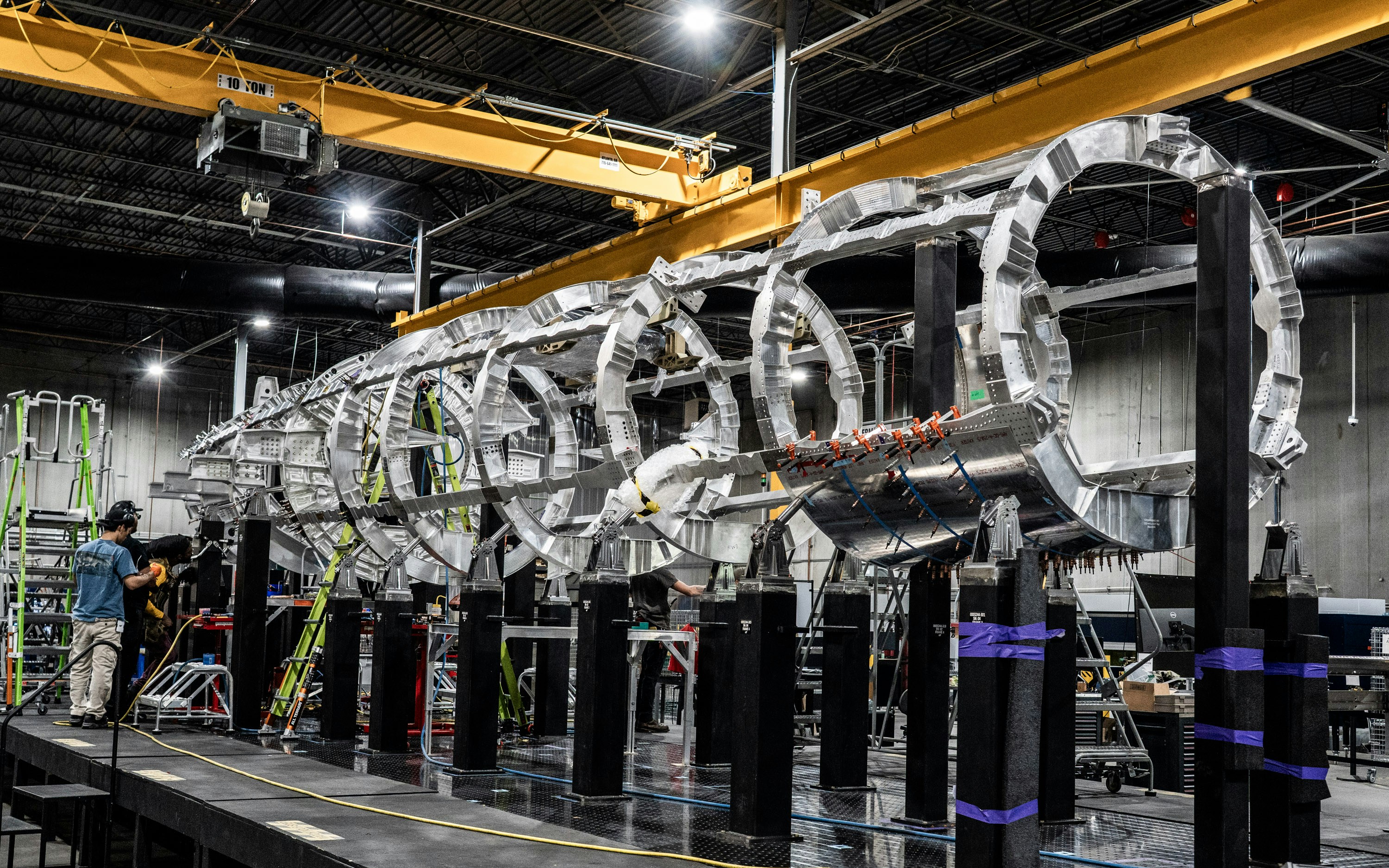
Small modular reactors are not the gigantic, site-specific, bespoke megaprojects that produced the disasters in the public vocabulary. They are modular, factory-fabricated, precision-engineered systems with passive safety designs — engineered to shut down safely without operator intervention or external power. Many advanced SMR designs specifically eliminate the cascading failure modes associated with earlier reactor generations.
The future nuclear economy may look less like Hoover Dam and more like aerospace manufacturing.
— Josh Dambacher
Kansas should recognize that description.
Why Kansas Actually Fits
Wichita already knows how to build machines that cannot fail.
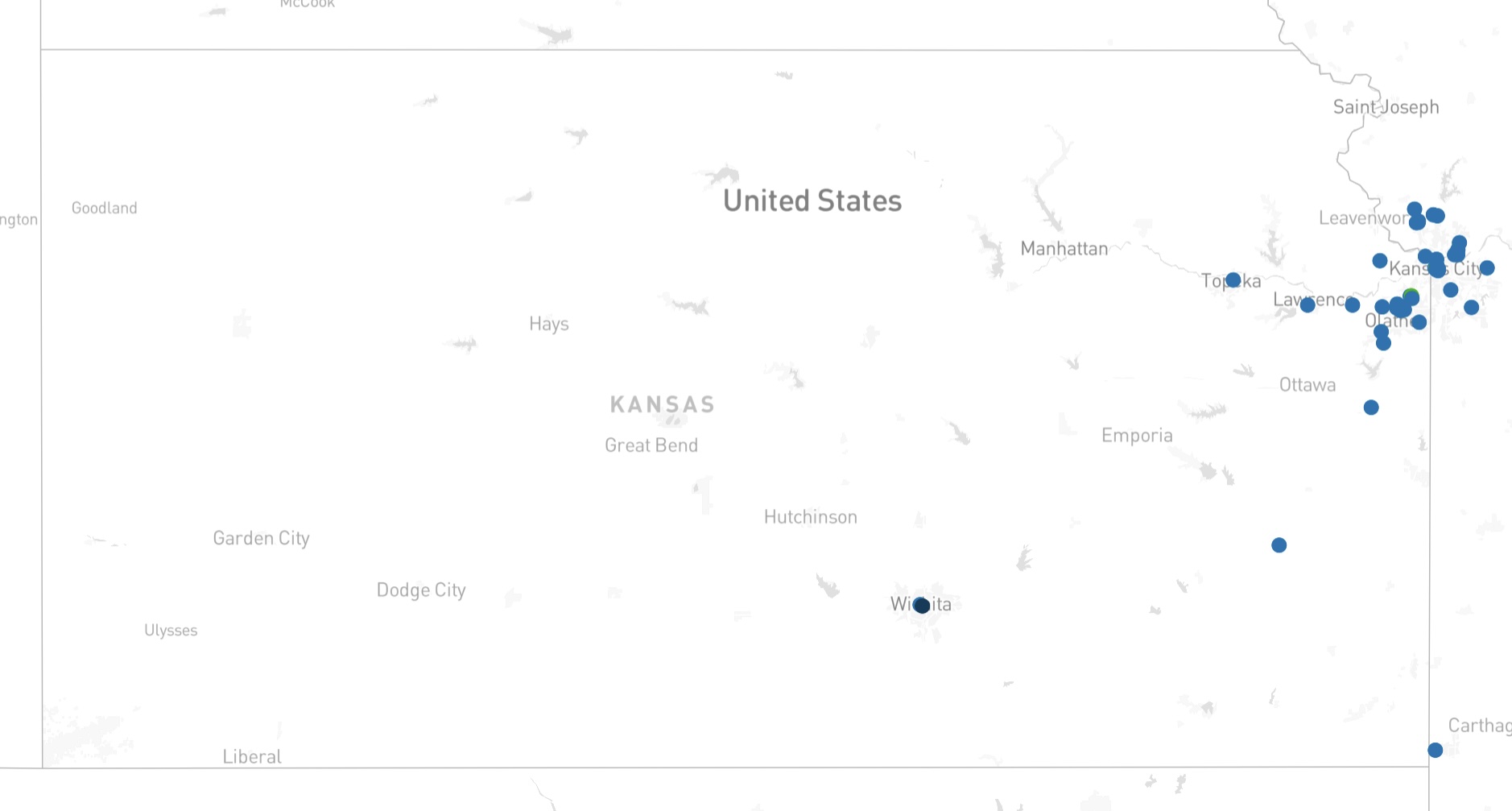
Kansas produces roughly 35 percent of the world's general aviation aircraft. Spirit AeroSystems. Textron Aviation. NIAR. Decades of high-consequence engineering, precision manufacturing, safety culture, regulatory compliance, advanced materials, and machining tolerances that the commercial aviation industry enforces with standards most industries never approach. These are not soft assets. They are exactly the capabilities advanced nuclear manufacturing requires.
Kansas is also not starting from zero institutionally. Wolf Creek has operated for decades. Evergy has explored an agreement with TerraPower. Deep Fission is working in Parsons. The cultural and regulatory familiarity is already there, diffuse but real. Wolf Creek itself was expensive, slow, and politically contentious — which is precisely why advocates of modular reactor manufacturing argue for a fundamentally different industrial model.
Add central geography, lower industrial costs, available land, freight access, and an engineering workforce that is already here and already trained, and the picture becomes clearer than most people in this state seem to recognize.
The Real Bottleneck Is Not the Technology
America does not primarily face a nuclear technology constraint. It faces an industrial capacity constraint.
The question is not whether we can design a reactor. The question is whether we can build reactor vessels, produce specialty forgings, manufacture coolant systems, fabricate precision components, certify engineering labor, and stand up the regulatory manufacturing infrastructure at the scale the AI economy will require.
Kansas does not need to invent the reactor. It does not need to become Silicon Valley. It does not need to outcompete Wyoming on deployment. It can manufacture components, engineer systems, support certification, and participate in the industrial layer that advanced nuclear deployment will require.
That is a considerably more Kansas-like economic-development path than the one being argued over at county commission meetings.
A Political Advantage Nobody Is Talking About
There is a subtler point here.
Hosting a hyperscale data center creates visible, concentrated local impact. A giant campus. Transmission infrastructure. Noise. Water consumption. One community absorbs it all.
Manufacturing supply-chain participation spreads differently. It is more diffuse, more familiar, more aligned with what Kansas industrial communities already understand themselves to be doing.
"Kansans may not want a hyperscale data center next to their subdivision. They may feel very differently about building reactor components in Wichita."
A Word on Uncertainty
Nuclear remains expensive. SMR timelines are uncertain. No small modular reactor has been commercially proven at scale in the United States. Regulatory pathways are real and slow. Public concerns are legitimate and will not be argued away by a single op-ed.
But the direction of travel matters more than the uncertainty about pace. The question is not whether every reactor company succeeds. The question is whether advanced nuclear becomes part of the energy mix supporting the AI economy over the next twenty years. The answer, increasingly, appears to be yes. And the companies spending billions on power procurement agreements seem to agree.
Kansas Has the Pieces
Kansas may decide it does not want every data center.
Fine.
The AI economy will still need electricity. It will still need reactors. It will still need the factories, engineers, machinists, and industrial systems capable of building them.
Supporting Analysis
A full SWOT analysis and state-by-state competitive comparison — how Kansas stacks up against Wyoming, Texas, Tennessee, and others competing for the same industrial position.
Read: Kansas & the SMR Opportunity — SWOT Analysis →
What Kansas Should Actually Do
The argument for Kansas is not speculative. The pieces are already here. The question is whether anyone in Topeka is paying attention.
Three things the legislature and the Governor's office could do before the next session ends.
First, task the Kansas Department of Commerce with a manufacturing readiness assessment — a formal mapping of which Wichita aerospace suppliers could qualify for nuclear-grade component manufacturing, and what the certification gaps are. This costs almost nothing. It signals to every site selector and reactor developer in the country that Kansas is paying attention.
Second, require a public progress report on the Evergy-TerraPower exploratory agreement. Evergy — Kansas's primary electric utility — has already opened a formal conversation with TerraPower, Bill Gates's advanced nuclear company, about potential SMR deployment in Kansas. Nobody outside a small circle knows where that conversation currently stands. Sunlight is not a radical demand.
Third, the Governor's office should formally engage Deep Fission — the advanced nuclear company that broke ground in Parsons, Kansas in December 2025 as part of the Department of Energy's Reactor Pilot Program, targeting criticality by July 2026. The Kansas Department of Commerce has already pledged support for community engagement. That is a start. The next step is to ask Deep Fission directly what Kansas supplier relationships it needs, and to connect those needs to the manufacturing base in Wichita. Kansas does not need to find a federal program to apply for. It already has a reactor in the ground.
None of these is a moon shot. None requires a subsidy regime or a new agency. Kansas has done harder things with less.
The server farms may go elsewhere. The industrial base does not have to.
— Josh Dambacher
Josh Dambacher is a Kansas attorney and spokesman for Republicans Overseas. He is a regular commentator on American politics for the BBC, CNN International, GB News, and TalkTV. He writes The Plains Ledger.
— J.D.